


Blogs
Toy Economy In India: 8 Essential Business Questions
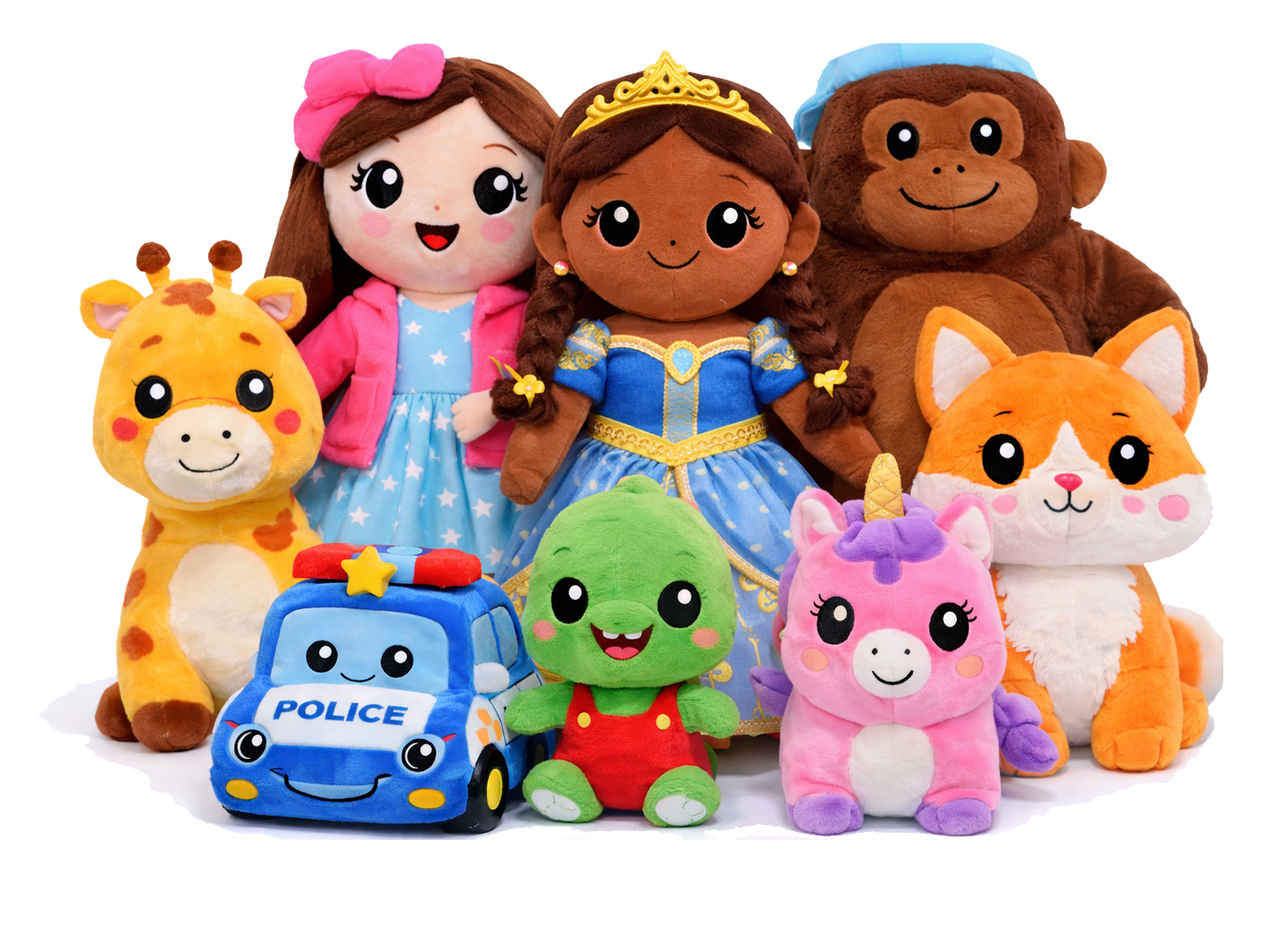
Understanding toy economy in India
This guide to toy economy in India brings together eight practical considerations, a planning example, and questions to help you compare the choices that matter.
The most useful way to understand India's toy economy is to follow the chain from a customer's purchase to a retailer, distributor, manufacturer, and material supplier. A growing headline market can still contain difficult product categories and uneven business performance. For a plush company, the opportunity depends on which customers it serves and how reliably it can meet their needs.
In a release dated 7 July 2026, PIB reported toy exports of US$384.7 million in FY2025–26 across HSN 9503, 9504 and 9505. This broad grouping is not a measure of the Indian plush market alone. Treat the figure as a dated trade snapshot, not a forecast of domestic retail demand. PIB: Strengthening India’s Toy Ecosystem (7 July 2026).
Eight priorities for toy economy in India
1. Compare figures with matching definitions
Retail sales, factory output, export shipments, and marketplace revenue measure different activities. They cannot be substituted for one another. A report about all toys may include games and electronic products, while a plush business sells a much narrower range. Growth in the larger category does not establish growth for every type of stuffed animal.
Before using a number, note the geography, period, currency, product coverage, and measurement method. Check whether values are nominal and whether the report tracks units as well as money. When definitions differ, explain the difference instead of forcing a comparison. A smaller, well-defined dataset is often more useful than an impressive but poorly matched headline.
2. Evaluate local sourcing through the actual workflow
Geographic proximity can make sample discussions, visits, and replenishment easier, but it is not a substitute for supplier evaluation. A nearby workshop may still depend on materials arriving from elsewhere. A distant supplier may have a well-organised approval process. Ask how the specific order will move through design, purchasing, production, checking, and dispatch.
Compare realistic response times and responsibilities. Find out who can approve a fabric substitution and how a delivery delay will be communicated. The strongest sourcing choice is the one whose capabilities match the project. Local production is most valuable when the operational advantages are demonstrated in the order, rather than assumed from an address.
3. Understand why revenue and volume can diverge
A business can collect more revenue while selling fewer units if its average selling price increases. It can also move more pieces while earning less contribution per order because of discounts, packaging, or delivery costs. Looking at revenue alone hides these changes.
Track quantity, realised selling price, discounts, and relevant variable costs together. Compare the same product types over a similar period. If a premium collection changes the sales mix, identify that effect separately. This makes discussions about growth more precise and helps prevent a popular but expensive-to-serve design from quietly weakening the rest of the range.
4. Separate attention from purchase intent
A toy can attract smiles without generating orders. Ask what happens after somebody sees it: do they compare dimensions, ask about delivery, request a quotation, or leave? These actions reveal different levels of interest. A shopkeeper's reorder tells you something different from a social-media reaction. Keep those signals separate when choosing a range.
Start with a small, clearly defined audience and one buying occasion. Record what people choose, what they reject, and their reasons. The result may suggest a different size or price point rather than a completely new character. This approach turns a broad trend into a decision that a small business can actually test.
5. Balance choice against inventory complexity
Every additional colour, size, and character divides demand into smaller pools. A large assortment can look impressive while leaving too little depth in the products customers actually want. It also creates more opportunities for picking errors and uneven replenishment.
Begin with a range that has clear roles: an accessible option, a core product, and a more distinctive item where the audience supports it. Review each variation on its own performance. Keep a record of lost sales caused by stockouts as well as unsold stock. The aim is not to minimise choice blindly, but to make every variation earn the space, cash, and attention it requires.
6. Map when cash leaves and returns
Stock can be commercially attractive and still put pressure on cash. A deposit may be due well before production, with the balance and freight payable before customer receipts arrive. Sketch that sequence alongside the delivery plan.
Consider what happens if sales take longer than expected or a business customer pays later than planned. Avoid funding a large assortment solely on an optimistic launch forecast. Discuss payment milestones clearly and keep a reserve appropriate to the business. Understanding the timing of cash movements helps prevent a sourcing decision from crowding out essential spending on fulfilment, customer service, or the next successful reorder.
7. Build a small evidence file
Useful evidence does not have to begin with an expensive research project. Save dated customer questions, anonymised reasons for returns, retailer feedback, and actual reorder intervals. Group comments by the problem they describe. Five independent complaints about an unclear size photograph deserve more attention than one enthusiastic reaction to a colour.
Keep observations separate from explanations. A slow-selling design may suffer from weak placement, an unsuitable price, or limited awareness; the character itself may not be the problem. Change one meaningful variable during a small trial and record the result. This creates a practical learning process instead of a succession of guesses dressed up as market insight.
8. Use scenarios instead of confident predictions
A forecast becomes more useful when its assumptions are visible. Write a cautious, a central, and an optimistic case for demand. Explain what would have to happen for each case to occur. A new retail account, stronger repeat purchases, or a delayed launch can change the result more than a broad industry headline.
Use the cautious case to test whether the plan remains manageable. Keep room to replenish a promising design without committing every rupee to the first run. Scenario planning does not predict the future precisely. It helps a business recognise changing conditions early and make a considered response rather than an expensive emergency decision.
A practical toy economy in India example
Illustrative planning example, not a Tubby Toys customer case study.
Consider a retailer deciding between replenishing familiar animal toys and adding a new premium range. National industry growth does not answer that choice. The retailer needs information about local demand, selling prices, storage space, and replenishment. Those details turn an economic story into an operating decision.
Your toy economy in India decision checklist
| Decision area | What to establish |
|---|---|
| Market definition | Separate all-toy data from plush-only demand. |
| Customer segment | Identify the buyer and buying occasion. |
| Business measure | Track units alongside realised prices. |
| Next decision | Choose a limited demand test. |
Questions about toy economy in India
Where should you start with toy economy in India?
Start with the main purpose and the person who will use or buy the product. For this topic, a useful first task is to separate all-toy data from plush-only demand. Write down the answer so that later comparisons use the same starting point.
What makes a useful toy economy in India comparison?
Compare options against the same requirements, using physical examples and written information where relevant. In particular, identify the buyer and buying occasion. Record anything that remains uncertain; an unanswered question should not quietly become an assumed advantage.
What should happen before a larger commitment?
Resolve the most important uncertainty with a proportionate check or trial. Track units alongside realised prices. Keep the result with the project notes, then choose a limited demand test. This creates a clearer basis for proceeding, revising the plan, or choosing another option.
Next steps and further reading
Explore Tubby Toys wholesale information and Tubby Toys to discuss a product brief.
Further reference: PIB: Strengthening India’s Toy Ecosystem (7 July 2026). Check the current product-specific guidance where requirements or claims affect your decision.