

Blogs
Future Of Soft Toys: 8 Exciting Directions to Watch
Understanding future of soft toys
This guide to future of soft toys brings together eight practical considerations, a planning example, and questions to help you compare the choices that matter.
The future of soft toys is likely to be shaped by several competing needs: expressive design, manageable pricing, clearer product information, and products that remain enjoyable after novelty fades. Connected features and unusual materials may suit some ranges, while simple characters remain right for others. These are directions to evaluate, not promises that a particular technology will dominate.
Eight priorities for future of soft toys
1. Use scenarios instead of confident predictions
A forecast becomes more useful when its assumptions are visible. Write a cautious, a central, and an optimistic case for demand. Explain what would have to happen for each case to occur. A new retail account, stronger repeat purchases, or a delayed launch can change the result more than a broad industry headline.
Use the cautious case to test whether the plan remains manageable. Keep room to replenish a promising design without committing every rupee to the first run. Scenario planning does not predict the future precisely. It helps a business recognise changing conditions early and make a considered response rather than an expensive emergency decision.
2. Identify who buys and who uses the toy
The purchaser and the recipient are often different people. A parent may prioritise care instructions, while a child notices the face. A corporate buyer needs reliable delivery, while an employee wants something worth keeping. A collector may examine proportions and edition details more closely than the packaging designer expects.
Write separate descriptions of the buyer and the user before developing the product. Include the setting in which each encounters it. This prevents a common mistake: designing an attractive object that is inconvenient to purchase, distribute, store, or maintain. A successful brief explains the whole journey, from first enquiry to the toy's place in everyday life.
3. Make the character recognisable without tiny details
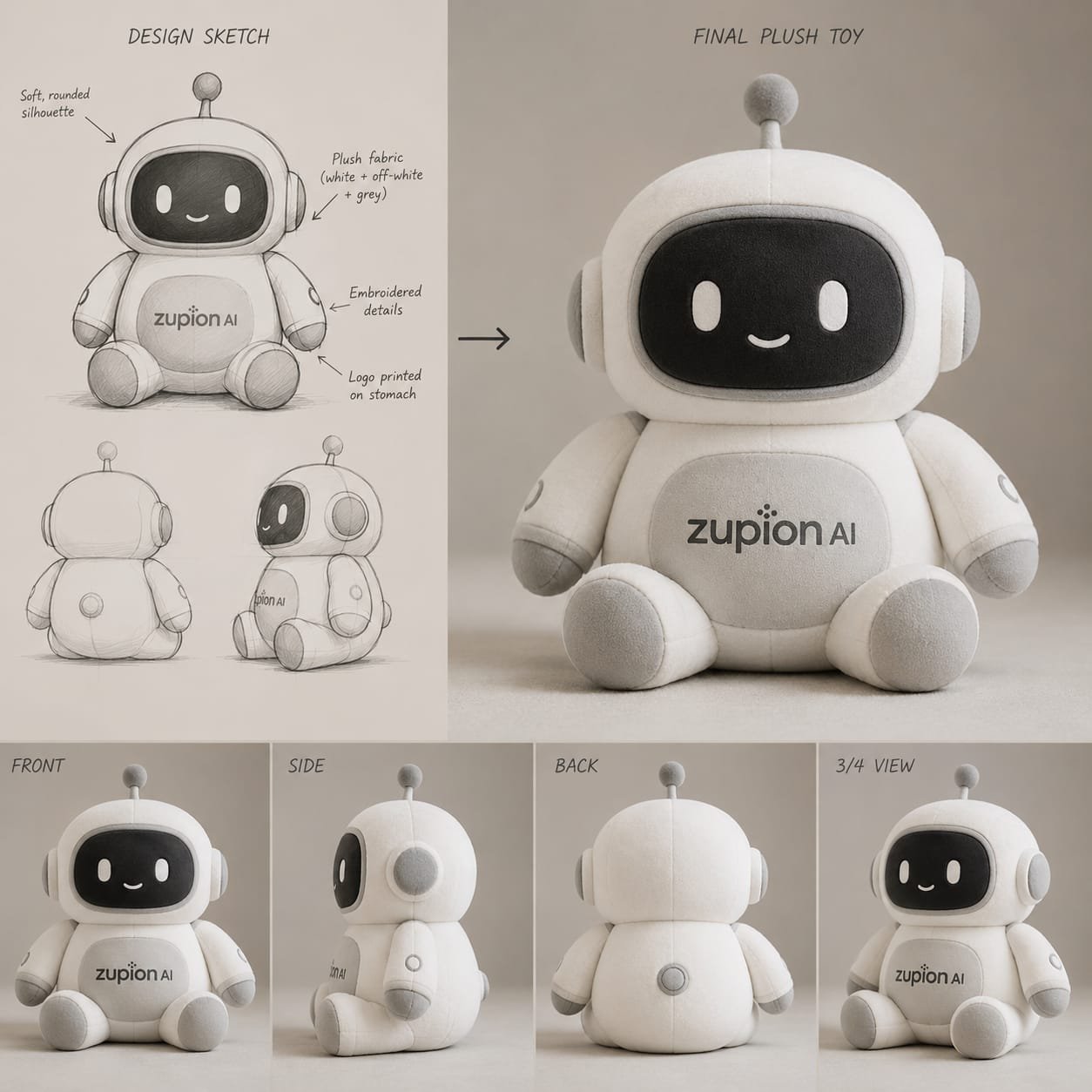
A plush design has to communicate through volume, fabric, and seams. Details that are easy to draw may disappear when translated into pile fabric or a small finished size. Begin by checking the silhouette, main colour areas, and the relationship between the head and body.
Ask whether the character remains recognisable from across a room and from more than one angle. Preserve a few defining features instead of forcing every line of the artwork into stitching. This often gives a cleaner result and makes inspection easier. A simpler design can still feel expressive when its proportions and facial placement are handled carefully.
4. Consider the whole useful life
An environmental discussion should extend beyond the first material choice. Durability, care, packaging, transport, repair options, and what happens when the item is no longer wanted all affect the practical picture. A product that is difficult to maintain may have a shorter useful life than its marketing suggests.
Ask which improvements are measurable for the project in question. Reducing unnecessary packaging or making care instructions clearer can be concrete steps. Avoid treating any one material as a complete answer. A useful plan identifies the trade-offs, supports claims with evidence, and explains what the customer can realistically do to keep the toy in good condition.
5. Define what the toy can do without a connection
Interactive features should be understandable before purchase. Ask which functions are available offline and which depend on an app, account, subscription, or remote service. Consider what remains if the phone is unavailable or the service is discontinued.
A simple local sound feature and a networked conversational system create very different expectations. Describe that difference clearly. Review setup, controls, and the experience of an adult managing the product. The physical plush should also remain appropriate for its intended use. A technology feature adds value when it supports an understandable activity and remains manageable throughout the period the owner expects to use the toy.
6. Treat ongoing support as part of the product
A technology-enabled toy may depend on software maintenance and compatible devices after the physical item has been sold. Ask who provides support, how updates are delivered, and what the stated support period means. Consider how a family obtains help if setup fails.
Keep replacement, warranty, and service information clear and appropriate to the product. Test the ordinary tasks that users will face, including resetting or transferring the item where those features exist. A compelling demonstration is only the beginning. The product needs a practical plan for the less glamorous moments when something changes, stops connecting, or no longer works as expected.
7. Use a pilot to answer one important question
A trial becomes useful when the team knows what it is testing. It might examine whether the size works for delivery, whether the character is recognised, or whether recipients understand a campaign message. Avoid changing every feature at once and then trying to interpret the result.
Choose a representative setting and collect specific observations. Record practical friction as well as positive reactions: difficult packaging, unclear instructions, slow handling, or repeated questions. Decide in advance what would justify a larger order. This keeps the pilot from becoming a ceremonial approval exercise and turns it into a meaningful way to improve the final product or distribution plan.
8. Separate attention from purchase intent
A toy can attract smiles without generating orders. Ask what happens after somebody sees it: do they compare dimensions, ask about delivery, request a quotation, or leave? These actions reveal different levels of interest. A shopkeeper's reorder tells you something different from a social-media reaction. Keep those signals separate when choosing a range.
Start with a small, clearly defined audience and one buying occasion. Record what people choose, what they reject, and their reasons. The result may suggest a different size or price point rather than a completely new character. This approach turns a broad trend into a decision that a small business can actually test.
A practical future of soft toys example
Illustrative planning example, not a Tubby Toys customer case study.
A brand could develop a plain character, an optional sound version, and a more detailed collectible. Instead of launching all three at once, it can test which use customers actually value. The strongest future-facing decision may be improving the ordinary version rather than adding the most elaborate feature.
Your future of soft toys decision checklist
| Decision area | What to establish |
|---|---|
| User benefit | Name the problem a new feature solves. |
| Durability | Consider care and continued use. |
| Technology | Explain offline and connected functions. |
| Evidence | Test response before scaling. |
Questions about future of soft toys
Where should you start with future of soft toys?
Start with the main purpose and the person who will use or buy the product. For this topic, a useful first task is to name the problem a new feature solves. Write down the answer so that later comparisons use the same starting point.
What makes a useful future of soft toys comparison?
Compare options against the same requirements, using physical examples and written information where relevant. In particular, consider care and continued use. Record anything that remains uncertain; an unanswered question should not quietly become an assumed advantage.
What should happen before a larger commitment?
Resolve the most important uncertainty with a proportionate check or trial. Explain offline and connected functions. Keep the result with the project notes, then test response before scaling. This creates a clearer basis for proceeding, revising the plan, or choosing another option.
Next steps and further reading
If you are considering a product or bulk order, use Tubby Toys wholesale information as a starting point. Share the intended use, quantity, destination, and timing, and ask the team to confirm the available options for your brief. You can also explore Tubby Toys for further product information.
Further reference: The Toy Association: global sales data, 2025 year end. Check the current product-specific guidance where requirements or claims affect your decision.